
Cross the Welsh Bridge in Shrewsbury and you enter the suburb of Frankwell which, like other low-lying areas close to the river, was often flooded. In Jan 1880, inhabitants woke to find the Severn “bank full”… it rose about six feet, thus making it the highest flood since Christmas of 1869. In Frankwell… the effects of the flood were severely felt. A number of boats were plying from the bridge to White Horse Passage, whilst several cabs were carrying passengers from the bridge to the “Crow” for a penny a piece, and doing a brisk trade. Mr. Henry Hudson had, however, interfered with this trade… [he built] a footpath of planks raised on trestles, over which pedestrians were invited to pass for the moderate charge of one penny, the amount received being given to the fund for the relief of those who suffered from the flood. [There were some] ludicrous incidents ; lamplighters… unable to extinguish the public lights [with] water half-way up the pillars. Several public houses shut up… timber yards… submerged. (Eddowes’s Shrewsbury Journal, 7 Jan 1880).
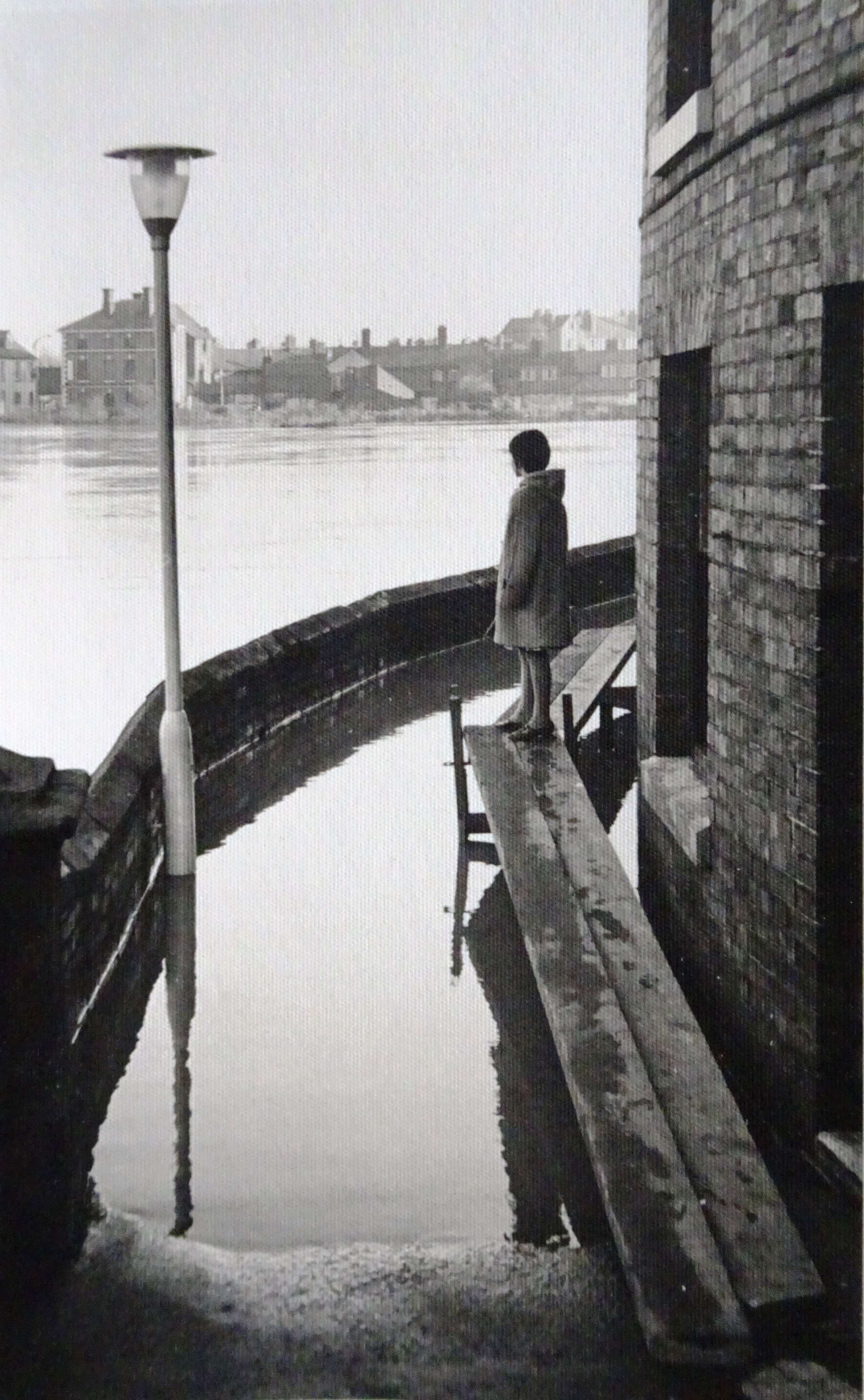
Frankwell was not a salubrious area. In 1836, “whole rows of houses [are] tenanted by shameless and wretched females to which thieves and robbers have frequently been traced” (Eddowes’s Salopian Journal, 6 Jul 1836). Barry Trinder, in his book Beyond the Bridges (2006) wrote “Criminals and prostitutes certainly frequented Frankwell in the 18th and 19th centuries, but their presence should not obscure its role as an industrious working-class suburb… malthouses… brewing… farming… nailers… craftsmen… public houses… lodging houses”.
The grandson of James Davies and Ann Tuckey Peplow (see the complicated family connections on the Bishop page) was Thomas James Davies who was born in 1897 in White Horse Passage in Frankwell. By 1913, three houses there were condemned as unfit for human habitation. Unhealthy living conditions in crowded houses built on narrow plots were described in 1861 “where the ground behind the houses is higher than the floors; the inhabitants for generations having thrown all their refuse here, whence it has never been carted away.” (Shrewsbury Chronicle, 16 Aug 1861).
St John the Baptist Hospital, of which there are no surviving remains, stood to the north of the road leading into Frankwell from the old Welsh Bridge, nearly opposite the chapel of St. George. Hospital and chapel both stood close to “The Stew”, where remains of fishponds were extant in the early 19th century. This was where Samuel Edward Ellis was living when he married Sarah Jane Bishop in 1899.
 Travels Through Time